
You may have noticed bad breath, a little drooling, or your pet turning away from dry food and thought it was probably nothing. That happens all the time. Pets are good at hiding pain, and dental disease often builds slowly, so it is easy to miss until eating changes, the mouth starts to smell, or a routine exam uncovers a bigger problem. The hard part is that what looks minor on the surface can already be affecting your pet’s comfort, appetite, and overall health, which is why contacting an emergency veterinarian in Nokomis Beach, FL can be important when symptoms suddenly worsen.
Pet dental care is not cosmetic. It is basic medical care. Healthy teeth and gums help your pet eat, play, and live without chronic pain. Neglected dental disease can lead to infection, tooth loss, and inflammation that affects more than the mouth. In general veterinarian visits, dental checks are one of the most useful ways to catch trouble early, before your pet needs more treatment and you face a larger bill.
Dental disease in pets often starts quietly and gets worse fast
Plaque forms quickly on a pet’s teeth. If it is not removed, it hardens into tartar, and bacteria settle along the gumline. That is where trouble grows. Gums become inflamed, pockets form around teeth, and infection can move deeper into the tissue that supports the teeth. By the time you see obvious signs, your pet may already be living with daily pain.
The signs are easy to dismiss because they do not always look dramatic. A dog still wants treats. A cat still comes to the bowl. They may just chew on one side, swallow food whole, paw at the mouth, or stop playing with chew toys. Some pets become irritable or quiet. Others seem fine until a tooth loosens or an abscess forms. According to Texas A&M Veterinary Medicine, pet dental care is important because oral disease can progress below the gumline where you cannot see it.
This is why veterinary dental health deserves attention during routine care. A mouth exam can reveal tartar, gingivitis, broken teeth, oral masses, and signs of pain that owners often never see at home. When a veterinarian finds a problem early, treatment is usually simpler and recovery is easier on your pet.
Oral health affects more than teeth and breath
Bad breath is often the first thing people notice, but the real concern is inflammation and infection. Chronic dental disease can make chewing painful, reduce appetite, and lower quality of life in ways that are easy to miss. A pet who seems less playful may not be slowing down because of age alone. Sometimes the mouth hurts.
There is also the bigger health picture. Bacteria from the mouth and constant inflammation can place extra strain on the body. The University of Illinois notes in its guidance on pets’ oral health needs regular attention that regular dental care supports long term health, not just cleaner teeth. That matters if your pet is getting older, has other health issues, or has a history of dental problems.
Cost is often where people hesitate, and that hesitation makes sense. A professional dental cleaning under anesthesia can feel like a lot, especially when your pet seems mostly normal. The problem is that waiting often turns preventive care into treatment for advanced disease, extractions, infection, pain medication, and more follow up. What starts as tartar can end as a much bigger medical issue.
Home dental care and professional cleanings work best together
Most pets need both home care and veterinary care. Brushing helps slow plaque buildup. Dental diets, water additives, and approved chews can help some pets. None of these fully replace a professional exam and cleaning when disease is already present below the gumline. Cornell’s guidance on dental disease and home dental care explains this clearly. Home habits help maintain oral health, but they do not remove established tartar under the gums or address damaged teeth.
| Approach | What It Helps With | Limits |
|---|---|---|
| Tooth brushing at home | Reduces plaque, freshens breath, supports gum health | Requires consistency, many pets need gradual training |
| Dental chews or dental diets | May reduce surface buildup and encourage chewing | Does not treat infection, loose teeth, or disease below the gumline |
| Routine veterinary oral exam | Finds pain, broken teeth, gum disease, oral masses | Some disease stays hidden without a full dental procedure |
| Professional dental cleaning | Removes tartar above and below the gums, allows full assessment | Costs more upfront, may require anesthesia and aftercare |
The strongest plan is simple. Use home care to slow disease between visits, and use regular veterinary exams to catch what home care cannot. That is the core of good animal dental care.
Small steps make dental care more manageable
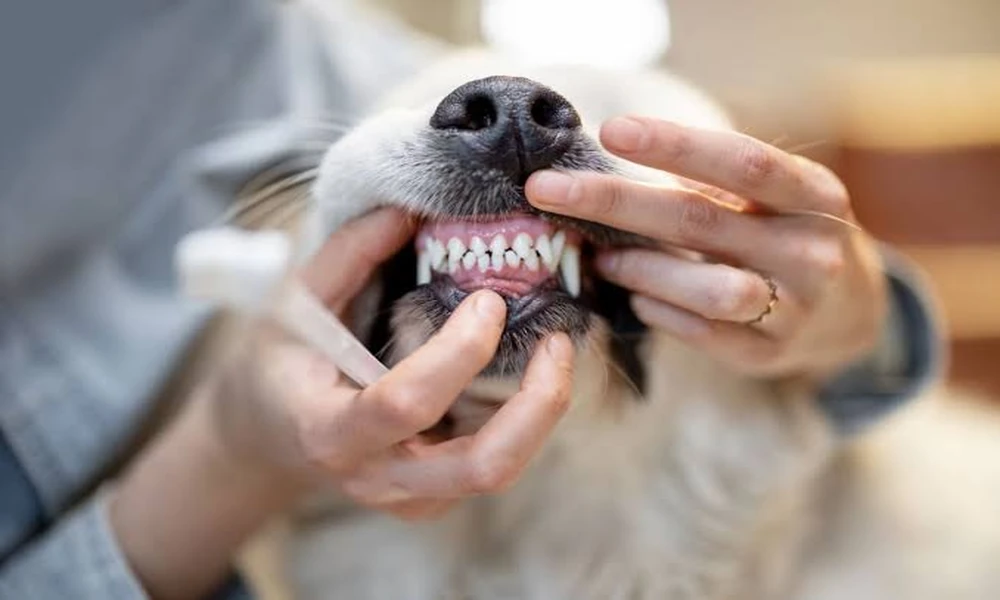
Start with a mouth check at home. Look for red gums, yellow or brown buildup, drooling, pawing at the mouth, broken teeth, or a sudden change in eating. You do not need to force a long exam. A quick look and a note of any changes is enough to know when to call.
Build one home habit your pet will tolerate. Brushing is the standard, but it does not have to begin with a toothbrush. Start by letting your pet taste pet safe toothpaste from your finger, then touch the outer teeth for a few seconds, then slowly build from there. If brushing is not realistic yet, ask your veterinarian about dental chews, rinses, or diets that fit your pet’s needs.
Schedule routine veterinary dental evaluations. A general veterinarian can tell you whether your pet needs monitoring, a cleaning, or treatment for active disease. That guidance matters because every pet is different. Age, breed, past dental history, and overall health all affect the right plan.
Good veterinary care includes the mouth, not just the body
If you have been unsure whether your pet’s dental issues are serious enough to address, you are not overreacting. Mouth pain is easy to miss and hard for pets to explain. Taking it seriously protects comfort, health, and quality of life. In veterinary care, dental health matters because your pet uses that mouth every day to eat, play, groom, and interact with you. Keeping it healthy is part of keeping the whole pet healthy.
If you have noticed signs of dental trouble, schedule a dental evaluation with a general veterinarian and get a clear plan for what comes next.