
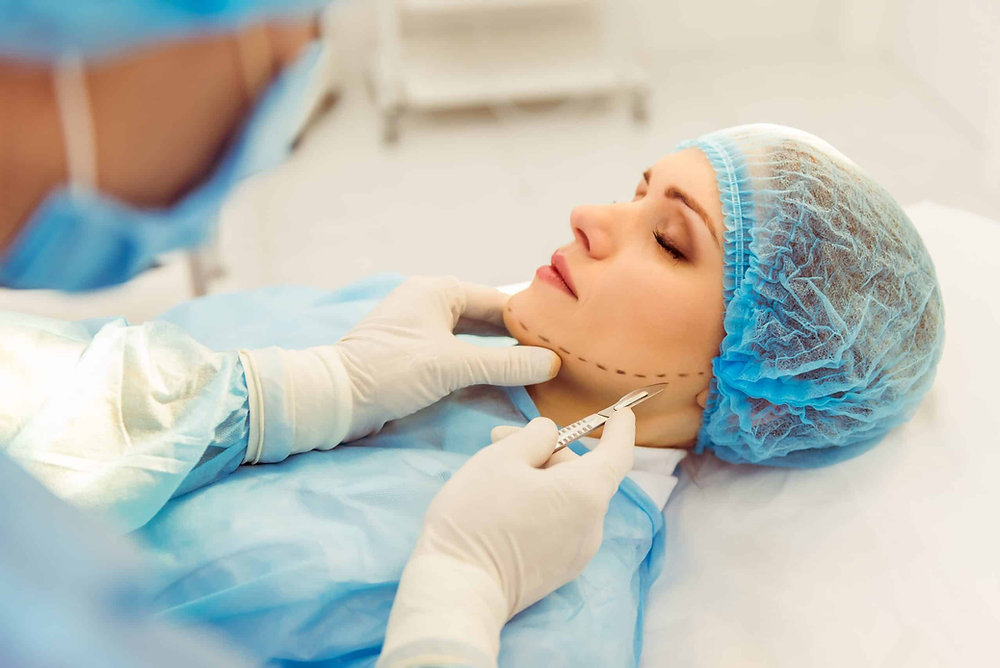
Facial reconstructive and aesthetic surgery represents a unique convergence of structural art and delicate biological healing. Among these procedures, nasal reshaping is widely recognized as one of the most technically demanding disciplines in head and neck surgery. The human nose is a complex three-dimensional architecture of bone, hyaline cartilage, and soft tissue, wrapped in a dense network of micro-vasculature. Because the nasal mucosa receives rich blood supply from branches of both the internal and external carotid artery systems, even minor structural adjustments carry a high potential for significant intraoperative bleeding, tissue bruising, and dead-space fluid collection.
In modern surgical care, achieving flawless cosmetic contours and uncompromised airway function extends far beyond skin-incisions and structural cartilage grafting. True surgical excellence relies on rigorous pre-operative biological preparation. Integrating comprehensive hematology screening protocols into the pre-operative workflow for rhinoplasty dubai ensures that vascular integrity, coagulation efficiency, and cellular oxygenation are fully optimized before entering the operating suite.
The Vascular Framework of the Nasal Complex
To appreciate why systemic blood health is critical to surgical outcomes, one must evaluate the vascular anatomy of the midface. The nose is supplied by an intricate arterial network, including the anterior and posterior ethmoidal arteries superiorly, and the facial, sphenopalatine, and superior labial arteries inferiorly.
During structural manipulation—such as osteotomies (controlled bone reshaping), dorsal hump reduction, or septal cartilage harvesting—these delicate mucosal vessels are divided. Under normal physiological conditions, the body responds through immediate vasoconstriction and the rapid activation of the coagulation cascade. However, if subclinical primary or secondary hemostatic defects exist, this delicate mechanism falters, leading to persistent capillary oozing, delayed flap re-attachment, and heightened risks of dead-space complications.
Essential Hematological Parameters in Pre-Surgical Screening
Standard pre-operative evaluation often includes basic screening, but complex facial structural surgery demands a comprehensive investigation into micro-vascular health, clotting efficiency, and oxygen-carrying capacity.
1. Coagulation Cascades and Hemostasis (PT/INR, aPTT, PFA)
-
Prothrombin Time (PT/INR) & Activated Partial Thromboplastin Time (aPTT): These baseline panels evaluate the extrinsic, intrinsic, and common pathways of coagulation. Subtle elevations in aPTT can uncover undiagnosed Factor VIII or Factor IX deficiencies (mild hemophilia), while prolonged PT levels may indicate underlying vitamin K deficiency or subclinical hepatic dysfunction.
-
Platelet Function Analysis (PFA-100) & Platelet Count: Having a normal platelet count ($150,000 \text{ to } 450,000 / \mu\text{L}$) does not guarantee adequate platelet performance. Platelet dysfunction—often induced by non-steroidal anti-inflammatory drugs (NSAIDs), high-dose omega-3 supplements, or underlying Von Willebrand Disease (VWD)—prevents proper platelet plug formation at mucosal surgical sites.
2. Oxygenation and Tissue Healing Dynamics (Hemoglobin & Red Cell Indices)
-
Hemoglobin (Hb) and Hematocrit (Hct): Oxygen delivery to regenerating cartilage grafts and healing skin flaps depends entirely on hemoglobin concentration. Anemia (Hb <12g/dL) causes tissue hypoxia at the surgical bed, slowing fibroblastic activity, impairing collagen deposition, and dramatically increasing the risk of cartilage graft resorption or skin flap necrosis.
Preventing Hematoma Formation and Protecting Graft Viability
The primary goal of hematological optimization is preventing the formation of a septal or sub-galeal hematoma. A septal hematoma occurs when blood collects between the central septal cartilage and its overlying mucoperichondrium—the vital membrane that supplies blood and nutrients to the cartilage.
The Cascading Complications of Uncontrolled Bleeding:
-
Ischemic Cartilage Necrosis: Because nasal cartilage is avascular and relies entirely on passive diffusion of nutrients from the perichondrium, an intervening blood pocket cuts off oxygen supply. Left unevacuated, this leads to rapid cartilage death and eventual collapse of the nasal bridge (saddle-nose deformity).
-
Fibrotic Distortion: Unabsorbed blood collections organize into rigid fibrous scar tissue over weeks, altering fine tip definition and creating irregular contours on the bridge.
-
Infection Risk: Static blood pockets serve as an ideal culture medium for bacterial proliferation, converting a clean surgical field into an active abscess.
By managing the patient’s biological profile prior to surgery, surgeons ensure that intraoperative bleeding remains minimal, allowing for immaculate field visibility, precise osteotomies, and clean graft placement.
Standard Aesthetic Evaluation vs. Integrated Hematological Protocol
|
Clinical Metric |
Isolated Aesthetic Assessment |
Integrated Surgical & Hematological Protocol |
|
Primary Scope |
Surface contours and facial symmetry |
Vascular integrity, clotting dynamics, and anatomical precision |
|
Pre-Op Screening |
Basic visual check and standard complete blood count (CBC) |
Comprehensive coagulation profiling (PT/aPTT), PFA, and metabolic panels |
|
Tissue Dissection |
General mechanical management |
Minimally invasive, hemostatically controlled dissection |
|
Complication Risk |
Higher incidence of post-op bruising, prolonged edema, hematoma |
Minimized risk of hematoma, optimized graft survival, rapid healing |
|
Graft Stability |
Vulnerable to displacement from fluid buildup |
Protected through immediate, tight flap re-adhesion |
Conclusion: Biological Harmony in Modern Facial Reconstruction
True success in structural facial surgery requires an integrated approach that connects external technique with internal physiology. Achieving balanced, natural nasal contours while preserving open airway function depends directly on the body’s capacity to control bleeding, clear inflammation, and deliver fresh oxygen to healing tissues.
By uniting advanced structural techniques for rhinoplasty dubai with meticulous hematology screening, clinical teams create an exceptional standard of surgical safety. This comprehensive approach eliminates unexpected intraoperative challenges, minimizes post-operative swelling and downtime, and ensures that delicate structural modifications heal into lasting, functional results.